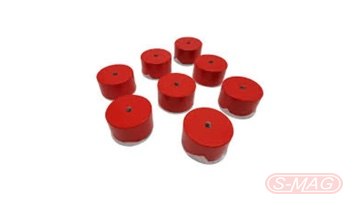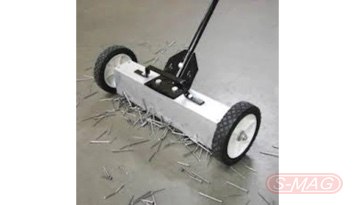
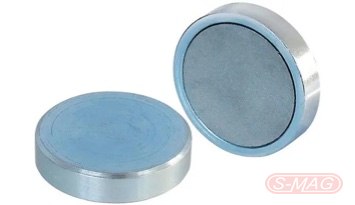
Alnico Shallow Pot Magnets
Shallow steel cup magnets for clamping and fixtures
A pot magnet is a magnet set inside a steel cup. The cup is also called the pot or the shell. Only one face of the magnet is open, and that face does the holding.
Pot magnets hold jigs, fixtures, sensors, guards, signs and tools. They also hang cables and hoses from steel frames.
A bare magnet has a field on every side. Most of that field goes into the air and does no work.
The steel cup collects the field from the back of the magnet. It carries the field round to the working face. The magnet forms one pole in the centre of the face. The rim of the cup forms the other pole around it. The field only has a short distance to travel between the two poles, through the steel you are holding.
This makes the pull on the working face several times what the bare magnet gives. It also puts the hold on one face only, so the back and sides of the pot do not grab nearby steel.
Magnet materials are hard and brittle. They can chip or crack if they are knocked.
In a pot magnet, the steel cup takes the knocks. A well made pot sets the magnet face a little below the rim, so any blow lands on the steel. The cup also keeps dirt and moisture away from most of the magnet.
A magnet on its own is too brittle to drill or thread. The steel cup can be drilled and threaded, so a pot magnet can be bolted to a fixture.
Common fixings are:
A pot magnet is rated by its pull. The rated pull is measured on thick, clean, flat mild steel with full contact. In the works the pull is often lower. These things reduce it:
Keep the working face and the steel clean. A pot magnet works best in direct contact.
Shallow pot magnets are low and flat. They suit thin plate and fixtures where height is limited. SMAG makes shallow pots with plain, threaded, countersunk or hook fittings. One example size is 25 mm diameter by 8 mm thick.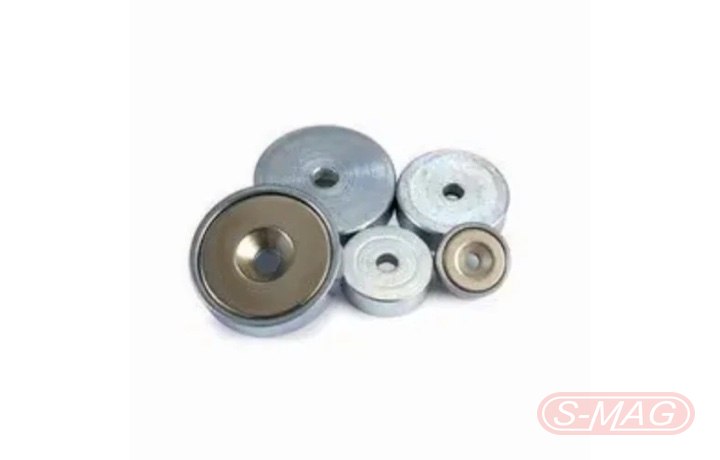
Deep pot magnets hold a taller magnet in a deeper steel shell. The field reaches further into the steel, so the pull on thick steel is higher than a shallow pot of the same diameter gives. They suit heavier clamping, jigs and tooling on steel frames. SMAG makes deep pots with plain, threaded or hook fittings.
SMAG pot magnets use an alnico core. Alnico is an alloy of aluminium, nickel and cobalt. It keeps its strength close to heat, and SMAG shallow pots are suited to heat up to 450 degrees Celsius. This makes alnico pots a good choice for fixtures near welding and heat treatment.
Santosh Magnetic Works makes alnico shallow pot magnets, alnico deep pot magnets and cast alnico power magnets, with custom diameters and heights to order. See the stock magnets range or contact us with the pull you need and the space you have.