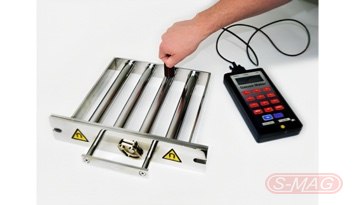
Gauss Meter
Hand-held meter for checking magnet strength
Magnetic filtration removes iron and steel particles from a liquid with a magnet. The liquid flows around magnetic rods. The particles are pulled onto the rods and stay there. The clean liquid carries on to the machine or the next stage of the process.
It is used for machine coolant, cutting fluid, neat oil, hydraulic oil, wash liquid and many process liquids.
A magnetic filter has two main parts: a housing and a set of magnetic rods.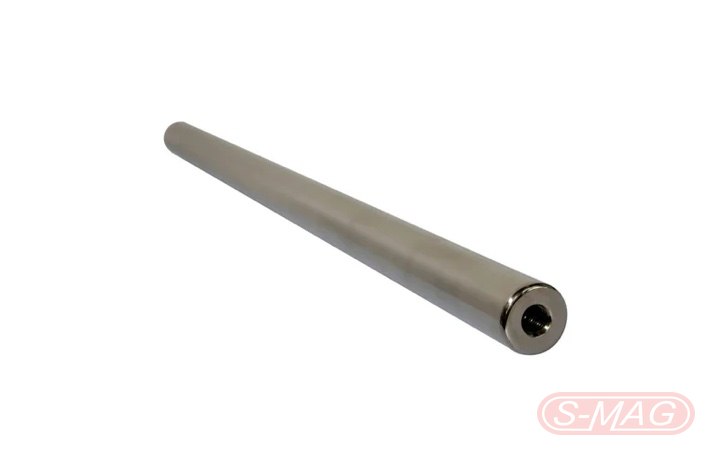
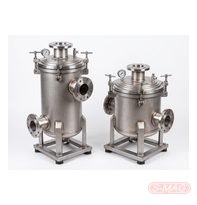
The housing is a sealed body with an inlet and an outlet. It fits into the pipe that carries the liquid. The rods hang inside the housing, in the path of the flow.
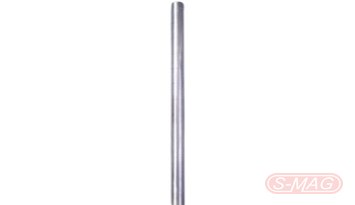
Each rod is a sealed stainless steel tube. Inside the tube are strong neodymium magnets with steel pole pieces between them. The pole pieces concentrate the magnetic field at the surface of the tube. The tube is welded and watertight, so the liquid never touches the magnets.
Iron and steel are ferrous metals. A magnet attracts them.
As the liquid passes the rods, each ferrous particle feels a pull towards the nearest rod. The pull is strongest close to the rod surface. A particle that comes close enough is drawn onto the tube and held there. The flow is not strong enough to wash it off.
Size does not decide what is caught. A large chip and a very fine grinding particle are both ferrous, so both are attracted. This is why a magnetic filter can hold the fine wear particles that pass through a paper or bag filter. The page on magnetic filters compared with other filters sets out the differences in full.
Some non-magnetic dirt is also held. It gets trapped in the layer of iron that builds up on the rods. The amount depends on the liquid and the process.
Magnetic strength. Strength at the rod surface is measured in gauss. A stronger rod reaches further into the flow and holds finer particles. SMAG rods are made in four strengths, from 7,000 gauss up to 13,500 gauss.
Time near the rods. The liquid must pass close to the rods and slowly enough for the particles to be drawn out. The housing is sized to the flow rate for this reason. The rods are spaced so that the liquid cannot find a path that avoids them.
Amount of iron. A heavy load of swarf fills the rods faster. More rods, a larger housing or more frequent cleaning deal with a heavy load.
Temperature. Neodymium magnets lose strength if they get too hot. Rare earth rods should stay below 100 degrees Celsius.
The rods sit in the flow with open space around them. The liquid passes through that space. As iron builds up on the rods, the liquid still has a clear path, so the flow to the machine stays steady and there is no pressure build-up.
A full rod collects less, though. Clean the rods before the layer of iron gets thick.
Fit the magnetic filter where the dirty liquid returns from the machine, before it goes back to the tank or on to any other filter. The magnet then takes out the iron first. Any bag, paper or cartridge filter after it receives less dirt and lasts longer.
Fit the filter with enough space above it to lift the rods out.
The collected iron comes off as a damp paste of metal. There is no filter bag or paper to throw away. The magnets keep their strength for many years, so the same rods go back in each time.
How often to clean depends on the amount of iron in the liquid. Check the rods daily at first. Once you know how fast they load, set a regular cleaning time.
Look for scratches or dents in the stainless tube. A damaged tube can let liquid reach the magnets. Replace a damaged rod.
A gauss meter measures the strength at the rod surface. Compare the reading with the certificate supplied with the rod.
Santosh Magnetic Works builds the magnetic coolant filter to order in Mumbai, with neodymium rods in a stainless steel housing sized to your flow rate and connection. Loose neodymium magnetic rods can also be fitted into an existing housing. See the filtration range or contact us with the fluid and the flow rate.