
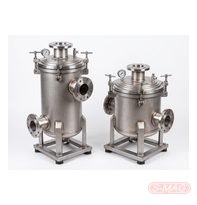
Magnetic Coolant Filter
Magnetic filter for coolants, oils and wash liquids, built to order
A coolant filter takes dirt out of the coolant as it circulates round a machine. The coolant goes back to the cutting area clean, so it can do its job.
Coolant is sprayed onto the tool and the workpiece while the machine cuts or grinds. It does three jobs:
After that, the coolant runs back to a tank, often called the sump. A pump sends it round again. The same coolant can circulate for months.
Every pass through the machine adds dirt:
On machines that work steel or cast iron, most of the solid dirt is ferrous. Much of it is very fine.
Dirt in the coolant goes back to the cutting area on the next pass. There it causes damage:
Dirty coolant also cools less well. The tool runs hotter and wears faster.
A coolant filter removes the dirt before the coolant goes back to the machine. The results are simple:
Clean coolant also flows at a steady rate and keeps a steady temperature. That helps close tolerance work such as grinding and deep hole drilling.
There are several kinds of coolant filter. Bag, paper and cartridge filters hold back particles larger than their pores. Centrifuges spin the dirt out. Magnetic filters pull iron and steel out of the flow. The guide to types of filtration for CNC machines explains each one.
On machines that work steel or cast iron, a magnetic filter is a good first stage. It holds very fine ferrous particles, it does not block, and it has no filter element to replace. Where there is also aluminium, brass or other non-magnetic dirt, a barrier filter after the magnet catches the rest. For a side-by-side view, see magnetic filters compared with other filters.
The right system depends on the particle size, the type of coolant, the flow rate and the amount of work the machine does.
Santosh Magnetic Works builds the magnetic coolant filter for water based coolants, neat oils, hydraulic oil and wash solutions. Each unit is built to order in Mumbai to suit the connection size and flow rate. See the filtration range or contact us with the machine, the fluid and the flow rate.