
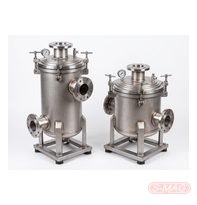
Magnetic Coolant Filter
Magnetic filter for coolants, oils and wash liquids, built to order
A CNC machine uses cutting fluid or coolant to cool the tool, lubricate the cut and wash away chips. The fluid picks up metal particles, dirt and sludge as it circulates. A filter removes them so the fluid goes back to the machine clean.
Dirty fluid wears tools, spoils the surface finish and damages pumps and slideways. The type of filter decides what is removed and how much work the filter needs.
A paper filter uses a roll or sheets of filter paper. The fluid passes through the paper. Particles larger than the pores stay on the surface. When the paper is loaded, fresh paper is fed in or the sheet is changed.
Strengths
Limits
A cartridge filter uses a cylinder of filter material. The material can be paper, fabric or metal mesh. The fluid passes through the wall of the cartridge and the dirt stays behind.
Strengths
Limits
A bag filter is a bag of filter cloth held in a housing. The fluid flows into the bag and out through the cloth. The bag holds a large amount of dirt before it is full.
Strengths
Limits
A centrifuge spins the fluid at high speed. The spinning force throws the solid particles outwards, where they collect. The clean fluid is taken from the centre. A centrifuge separates particles by their density, so it can remove very small particles.
Strengths
Limits
A magnetic filter passes the fluid over strong magnetic rods. Iron and steel particles are pulled onto the rods and held. The clean fluid flows on. To clean the filter, lift the rods out, wipe off the iron and put them back. How magnetic filtration works explains this in more detail.
Some non-magnetic dirt also gets caught in the layer of iron on the rods.
Strengths
Limits
| Paper | Cartridge | Bag | Centrifugal | Magnetic | |
|---|---|---|---|---|---|
| Cost to buy | Low | Low | Low | High | Medium to high |
| Dirt it can hold | Low | Medium | Medium | Medium | High |
| What it catches | All metals and dirt | All metals and dirt | All metals and dirt | All metals and dirt | Iron and steel |
| Life | Short | Medium | Medium | Long | Long |
| After use | Thrown away | Thrown away | Thrown away | Reused | Reused |
Many machines use two filters together. On machines that cut steel or cast iron, most of the dirt is ferrous. Fit the magnetic filter first. It removes the iron, and the paper, cartridge or bag filter after it catches the non-ferrous dirt. The second filter then fills more slowly, lasts longer and can often be a coarser grade.
For a closer look at magnetic and barrier filters side by side, see magnetic filters compared with other filters.
Santosh Magnetic Works builds the magnetic coolant filter to order in Mumbai, sized to the flow rate and connection of your machine. It can be fitted ahead of an existing paper, cartridge or bag filter. See the filtration range or contact us with the machine, the fluid and the flow rate.