
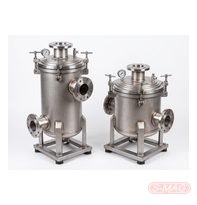
Magnetic Coolant Filter
Magnetic filter for coolants, oils and wash liquids, built to order
Machine coolant wears out. Tramp oil, bacteria, metal fines and the wrong mix all shorten its life. Most of these can be controlled with good habits. Start by keeping dirt out of the coolant.
Tramp oil is oil that leaks into the coolant from the machine. It comes from slideways, gearboxes and hydraulic systems. It floats on top of the coolant in the sump.
A layer of tramp oil keeps air away from the coolant. Bacteria grow under it, and the coolant starts to smell. Tramp oil also marks the parts and reduces cooling.
Remove it with a disc or belt skimmer, or with a coalescing separator. Fix the leaks that let it in.
Fine metal from cutting and grinding stays in the coolant and goes round the machine again and again. It scratches parts, wears tools and pumps, and turns into sludge in the sump.
Choose a filter to suit the metal you cut:
On mixed work, use both. Put the magnetic filter first. It takes out the iron, so the barrier filter after it fills more slowly and lasts longer. Magnetic filters compared with other filters explains the difference in detail.
Clean the magnetic rods before they are heavily loaded.
Coolant is a concentrate mixed with water. The mix must be right.
Check the concentration once a week with a refractometer. Adjust the mix to the level the coolant maker gives.
Coolant evaporates, and the water goes first. Top up with coolant that is already mixed to the right strength. Plain water from the tap lowers the concentration and helps bacteria grow.
Water with a lot of minerals leaves deposits in the machine. Reverse osmosis or deionised water avoids this.
When mixing, always add the concentrate to the water. Never mix two different coolants. They can react with each other and make the coolant unstable.
Swarf, chips and sludge settle in the sump. Bacteria grow in them, and sludge can block the pump.
Coolant that stands still in an idle machine goes bad faster. Bacteria grow when there is no flow and no air. Run the pump for a while each day, or use aeration, when a machine stands for a long time.
A bad smell means bacteria are growing. To stop it:
With good habits, one fill of coolant can last many months. Without them, it may need changing after a few weeks. The life also depends on the machine, the metal being cut and how many hours the machine runs.
Watch for these signs that it is time to change:
Santosh Magnetic Works builds the magnetic coolant filter to order in Mumbai. It takes fine iron out of coolants, oils and wash liquids, and it is cleaned by lifting the rods out and wiping them. See the filtration range or contact us with your machine and flow rate.