Neodymium Disc Magnets
Plated neodymium discs for sensors, fixtures and assemblies
Each magnet material has its own strengths. The right choice depends on the pull you need, the space you have, the heat around the magnet and the conditions it works in.
A permanent magnet keeps its magnetism after it has been magnetised. All the materials below are permanent magnets.
A temporary magnet acts like a magnet only while it sits in a magnetic field. A piece of mild steel on a magnet is a temporary magnet. It loses most of the effect when it is taken away.
An electromagnet is a coil of wire around a steel core. It is a magnet only while current flows through the coil. The strength can be changed by changing the current.
Neodymium magnets are made from an alloy of neodymium, iron and boron. They are also called NdFeB, neo or rare earth magnets.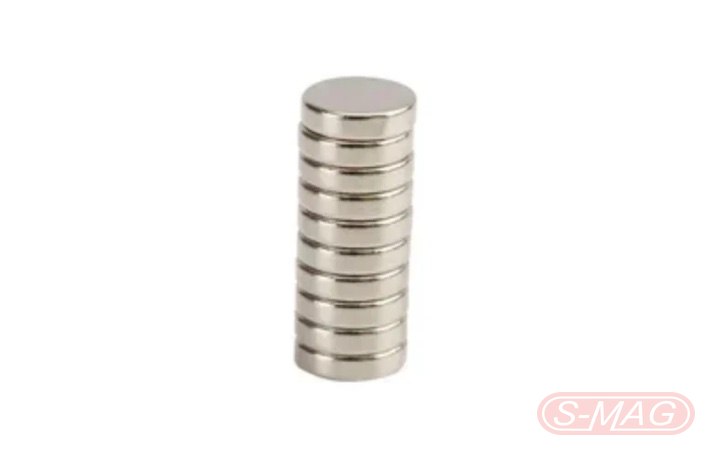
Neodymium is the strongest permanent magnet material. It gives the most pull in the least space, so a small neodymium magnet can do a large job.
It has two weak points. It loses strength when it gets hot, so keep standard grades below 80 degrees Celsius. It also rusts easily, so it is plated. A common plating is nickel copper nickel.
Neodymium is sold in grades such as N35 to N52. A higher number means a stronger magnet of the same size.
Samarium cobalt is the other rare earth magnet material. It is a little weaker than neodymium.
It works well at higher temperatures than neodymium. It also resists corrosion much better, so it often needs no plating. It is used where a strong magnet must work in heat or in harsh conditions.
Alnico is an alloy of aluminium, nickel and cobalt. The name comes from the first letters of each metal.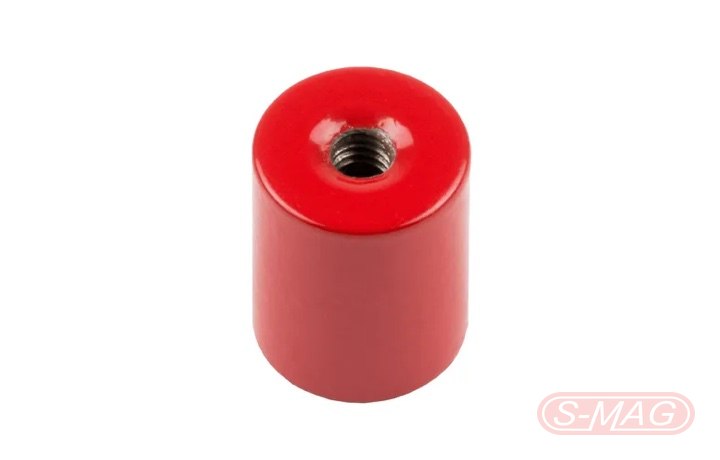
Alnico gives less pull than neodymium for the same size. In return it keeps its strength close to heat, and its field hardly changes over the years. This suits fixtures near welding and heat treatment, and instruments and sensors.
Alnico can lose some of its magnetism if it is placed near a strong opposing field or is knocked hard. It is often set in a steel pot, which protects it and directs its field to one face.
Alnico is made by casting or by sintering. Casting allows more complex shapes. Sintering gives better mechanical strength.
Ferrite magnets are made from iron oxide mixed with barium or strontium carbonate, then pressed and sintered. They are also called ceramic magnets.
Ferrite is the lowest cost magnet material and one of the most widely used. It resists corrosion well. It gives the least pull for its size of the materials here, so a ferrite magnet must be larger to give the same hold. It is common in motors, loudspeakers and general magnetic assemblies.
| Material | Pull for its size | Heat | Corrosion |
|---|---|---|---|
| Neodymium | Highest | Keep below 80 degrees Celsius for standard grades | Needs plating |
| Samarium cobalt | High | Good | Good |
| Alnico | Lower | Very good | Good |
| Ferrite | Lowest | Good | Very good |
Santosh Magnetic Works supplies neodymium and alnico magnets. The neodymium range covers disc, block and channel magnets in grades N35 to N52. The alnico range covers power magnets and shallow and deep pot magnets. See the stock magnets range or contact us with the pull, space and temperature you need.